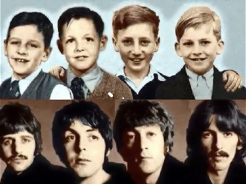

You must be out of your mind. These boys are going to explode. I am completely confident that one day they will be bigger than Elvis Presley – Brian Epstein to Dick Rowe, March 1962.
Brian Epstein, A Cellarful of Noise, 63.
Brian Epstein became The Beatles’ manager, being the first to recognize the group as a self-aligned, four-member team while they were still a local group playing in Liverpool. Epstein appeared to have an intuitive understanding of the band’s communal manhood in their gang-like unity as well as a passionate self-awareness of their individual masculinities. On November 9, 1961, Epstein attended The Beatles’ lunchtime show at The Cavern Club with his assistant, Alistair Taylor. Taylor described the revelation:
“About half an hour after Brian saw The Beatles he decided to manage them. I thought they were awful. He said, ‘they are awful, but I think they’re fabulous.’ “
The Beatles exuded camaraderie and raw, enthusiastic energy that represented masculine traits and behaviors Epstein recognized in himself. This tacit understanding was the foundation of one self-aligned male’s recognition of another. Epstein epitomized the self-aligned masculinity that The Beatles were later to portray, as he was a man who possessed magnetism, respectful manners and financial generosity. He was confidently elegant and charismatic, as well as the overseer of the maturing masculinity he recognized The Beatles possessed. As a mentor and ally, Epstein reflected on his association with the group of four:
Never in my life had I thought of managing an artist or representing or being in any way involved in the behind-the-scenes presentation, and I will never know what made me say to this eccentric group of boys that I thought a further meeting might be helpful to them and to me
Debbie Geller, In My Life: The Brian Epstein Story, 40.
Epstein reflected on the magnetic quality of The Beatles as well as his, yet unknown, purposeful involvement with them. He was clear in the knowledge that associating with the group was one that could fit into his unstructured life at that time in some positive way. In an effort to justify or even defend the aspect of his uncertainty about whether the allure of self-aligned masculinity was present in The Beatles personally or if it was contained in their music, Epstein wrote:
I am not here discussing their music at all, though, of course, it was and is this which is the core and reality of their success, and the Beatles themselves would not give a fragment of a moment’s thought to anything as abstruse as chemical appeal or collective magnetism. But I believe that there is something a little outside our normal experience in the happening of the Beatles and I believe it is valuable to make the point. It may be magic or it may be some strange, organic combination. Whatever it is, it is there.
Epstein, 81.
Even Epstein could not describe what qualities The Beatles exuded that would capture the attention of millions of fans over the years. However, he knew he wanted to be involved with them because of who they saw themselves to be. It is this writer’s opinion that there was a common link of self-aligned attributes that combined the foundation of strong loyalty and the freedom to choose personal, passionate preferences. And it would be the unstoppable momentum of this combination that Epstein was certain of.
The bow
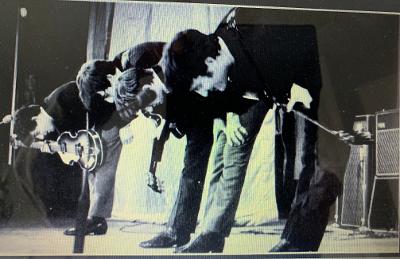
The famous bow down at The Royal Command Performance at the Prince of Wales Theatre in London, in the presence of the Queen Mother and Princess Margaret. November 4th, 1963.
This was Epstein’s marketing genius. Epstein fashioned The Beatles with not only an upscale couture that conveyed masculine confidence, but he also choreographed a performance protocol that reflected his own expanded, self-aligned creativity. The combination of these two aspects supported The Beatles’ performance of their alternative-sounding hit records and catapulted them to fame at their debut performance on the Sullivan show three months later. Epstein realized it would behoove the group’s acceptance into popular mainstream media to wear unconventional rock and roll attire as well as to display a proper stage etiquette. This reflected the self-aligned masculinity that showed the successfully merged, dichotomous combination of communal and passionate manhood traits and behaviors that became the singular disruptive masculine event of the new self-aligned manhood revolution.
 Beatles Fandom
Leave a comment