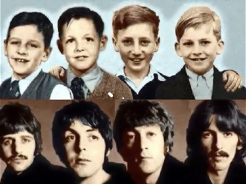
The disruptive event in modern masculinity.
The Beatles’ debut performance demonstrated the self-aligned results of merging communal and passionate emotions between The Beatles and their mentors who groomed them for this occasion. While the girls screamed, male fans realized that they too could express how they see themselves as men and imitate what they saw in the group. Why? Because The Beatles proved it could be done. The inseparable group of four displayed a confidence that exuded self-aligned masculinity that emoted societal leadership, and an independent self-awareness that was meaningful to both the individual and the greater societal whole in the pursuit of well-being.
Along with Sullivan’s professional intentions with The Beatles, there was a familial ease he had with them. Sullivan’s self-serving passionate manhood instinct had an opportunity to expand his passionate masculine identity as he was an elder, communal leader in the television media entertainment community. Sullivan was perceptive to the trend that The Beatles promoted. To recognize the trend was his occupation – an objective, passionate manhood decision and the Beatles benefited from his self-aware personal preferences to host them. Sullivan’s elder passionate masculinity recognized the lure of The Beatles and their respectful, professional response to Sullivan’s leadership kept the community strong and therefore profitable for both – the self-aligned gainful event.
For anyone who watched this telecast, Sullivan’s demeanor with The Beatles clinched any mistrust or suspicion about the group’s authenticity. After performing five songs in two sets, The Beatles joined Sullivan on the stage. He demonstrated the ease with which they had with each other, seizing the opportunity to publicly validate his opinion about them. Not only was he speaking to the audience – both the studio theater audience of 728 and the nearly 74,000,000 television viewers at home saying, “They’re tremendous ambassadors of goodwill,” he was also speaking to the counterculture trend, showing his approval and recommendation to accept the group into the popular American music lifestyle.
All of us on our show really like The Beatles so much. They are really four very well-mannered youngsters and I think that’s what American youngsters have recognized in them. And I think it is all as I say. You know, they come from Liverpool and there you have a big population of Welsh, Scotch and Irish [Sullivan is Irish]. The parents are very strict with these youngsters and consequently they come out of their homes well-mannered.
Beatles Bible, “The Beatles’ First Ed Sullivan Show,” November 2020, https://www.beatlesbible.com/1964/02/09/the-beatles-first-ed-sullivan-show
Sullivan’s senior media position allowed him to justify why The Beatles were so popular, linking the group’s good manners with the reason for their success. His words could not be misconstrued or taken as insincere.
Sullivan concluded that The Beatles’ allure was because they were well-mannered, and they were. Calling them ambassadors of goodwill was a strong, positive statement on their legitimacy for being there, which was perhaps also a self-serving statement, but one that was earned. Brian Epstein’s influence on the appearance of the group was not only an example of marketing genius, but The Beatles’ individual personalities showed a respectful, if not grateful response to an opportunity of a lifetime.
For other communal manhood mentors and allies, watch for: Sounds of Masculinity: Male Fandom and The Beatles’ Glory.
 Beatles Fandom
Leave a comment