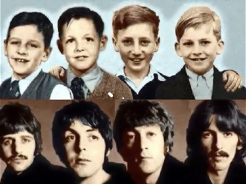
If the girls didn’t scream so much, the boys wouldn’t have taken the time to wonder why. When they took a closer look, they saw the dichotomous relationship between camaraderie and individual, personalized traits in each of the four Beatles. There was a singular purpose to their behavior with no selfishness or rivalry – and the girls approved.
The role of women in this discourse provides a welcomed insight into the interrelationship between the genders. That is, in the realization that the communal manhood perspective was the foundational aspect to The Beatles’ success as a team unit, the influence of the women in The Beatles’ early communal lives as well as the women and girls who shouted for them at the Sullivan show, were key to the success of the entire Beatles narrative. If it weren’t for their devotion, perhaps male fans would reconsider their masculinity relative to The Beatles, but the girls’ approval of them signaled, as did their foremothers during Rotundo’s communal era for their boys, that these four young men were virtuous for the community at large. Girls’ fascination for the Beatles during Beatlemania underscores how masculine traits and behaviors of the self-aligned male were attractive. Male fans witnessed women’s passion and regarded their responses as valid and sexually alluring. Boys who had a true fandom interest in the Beatles did not possess a masculine rivalry with the group and were more likely to imitate them instead. Male fandom reacted inclusively with the female opinion, regarding the new masculinity of the Beatles as non-threatening. Without women, there may have been little else with which to call the future of Beatlemania.
It can be said that The Beatles in their self-alignment, were able to unify their fan base, whether they were men or women. Also considering other studies on gender, such as in Jay Fliegelman in his Prodigals and Pilgrims: The American Revolution Against Patriarchal Authority, 1750-1800, there was an arrangement that existed between the genders regarding the raising of male children. In this traditional understanding, women were associated with affectionate nurturing and it was natural for men to accept that women were better qualified to distinguish men’s inherent masculine virtues. These qualities were necessary to establish and sustain a healthy environment for masculinity to thrive. This idea greatly favored the collaboration of the genders for unanimity and relevancy of ideas that were commonly held in their community at large. A woman’s standard of masculinity and performance of masculine behaviors influenced the model for masculinity.
For more on the early communal manhood lives of The Beatles with women, see the upcoming, Sounds of Masculinity: Male Fandom and The Beatles’ Glory.
 Beatles Fandom
Leave a comment